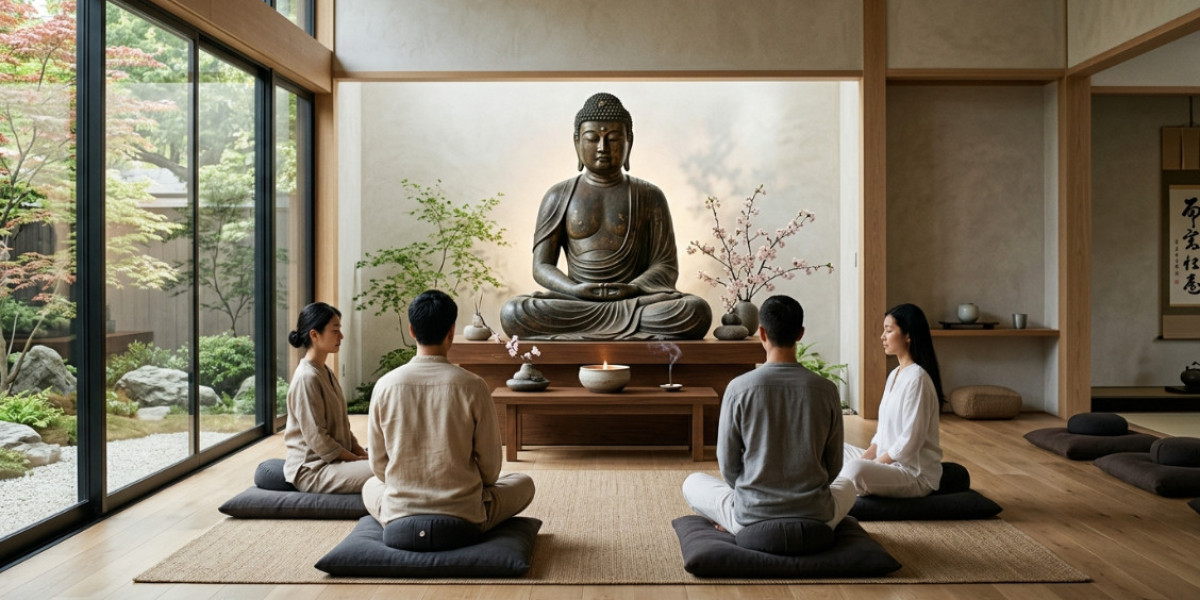

Buddha statues have long served as more than decoration — they function as visual anchors for contemplative practice, reminding practitioners of qualities like equanimity, compassion, and presence. As home meditation spaces have grown more common, these figures have found a renewed role in everyday environments rather than only temples and monasteries.
The posture and gesture of a statue often carry specific meaning. A seated figure with hands resting in the lap suggests meditative stability, while a standing figure with an open palm gesture often represents reassurance or the dispelling of fear. Understanding these details helps practitioners choose a piece that aligns with the intention behind their practice, rather than selecting purely on visual appeal. A figure with hands in a teaching gesture, for instance, might suit someone focused on learning or study, while a reclining posture often represents peaceful release, sometimes chosen for spaces associated with rest.
Material also plays a role in how a statue is perceived within a space. Stone and resin figures tend to feel grounded and permanent, while brass or metal pieces often introduce warmth and reflect light in a way that subtly animates a room. Wood carvings, by contrast, often bring a softer, more organic feel that pairs naturally with other natural-material décor. Placement matters too — many practitioners position a statue at eye level when seated, so it becomes part of the visual field during meditation rather than an incidental background object.
Scale is another consideration that beginners often overlook. A statue that overwhelms a small shelf can feel imposing rather than calming, while one that's too small to be noticed loses its function as a visual anchor entirely. Matching scale to the room, and to the specific spot where the figure will live, tends to matter more than matching scale to a general sense of what "looks right" in a showroom photo.
Browsing Buddha statues designed specifically for home use makes it easier to find a piece whose scale and style fit a personal practice space rather than a temple-sized setting.
Beyond their spiritual function, these figures often become a kind of anchor for the room itself — a fixed point that signals, every time you walk past it, that this is a space designed for awareness rather than distraction. For anyone serious about building a sustainable meditation habit, ShaolinMart offers a starting point for finding a piece that feels personally resonant, supported by descriptions that explain the meaning behind each posture and gesture.
Caring for a statue over time also factors into the experience of owning one. Regular, gentle dusting and occasional repositioning — rather than leaving a piece untouched indefinitely — keeps the object feeling like an active part of a practice rather than a forgotten decoration. Some practitioners treat this light maintenance as a small ritual in itself, pausing briefly each time to reflect on the qualities the figure represents before returning to daily routines. Over months and years, this kind of repeated, low-effort attention often deepens the personal connection to a piece far more than the initial purchase decision ever could.
FAQ
Does the posture of a Buddha statue matter? Yes, different postures and hand gestures (mudras) traditionally represent different qualities, such as calm, protection, or teaching.
What size statue works best for a home altar? Smaller statues, typically under 12 inches, work well for home spaces and personal meditation corners.
Is it disrespectful to use a Buddha statue purely for décor? Many practitioners use these figures both decoratively and spiritually; placing them respectfully (not on the floor or in a bathroom) is generally considered appropriate.
What material is best for a beginner's first statue? Resin and stone are popular starting points since they're durable, affordable, and available in a wide range of detailed designs.
How should a Buddha statue be cared for over time? Light, regular dusting and occasional repositioning help keep the piece feeling like an active part of a practice rather than a static decoration.