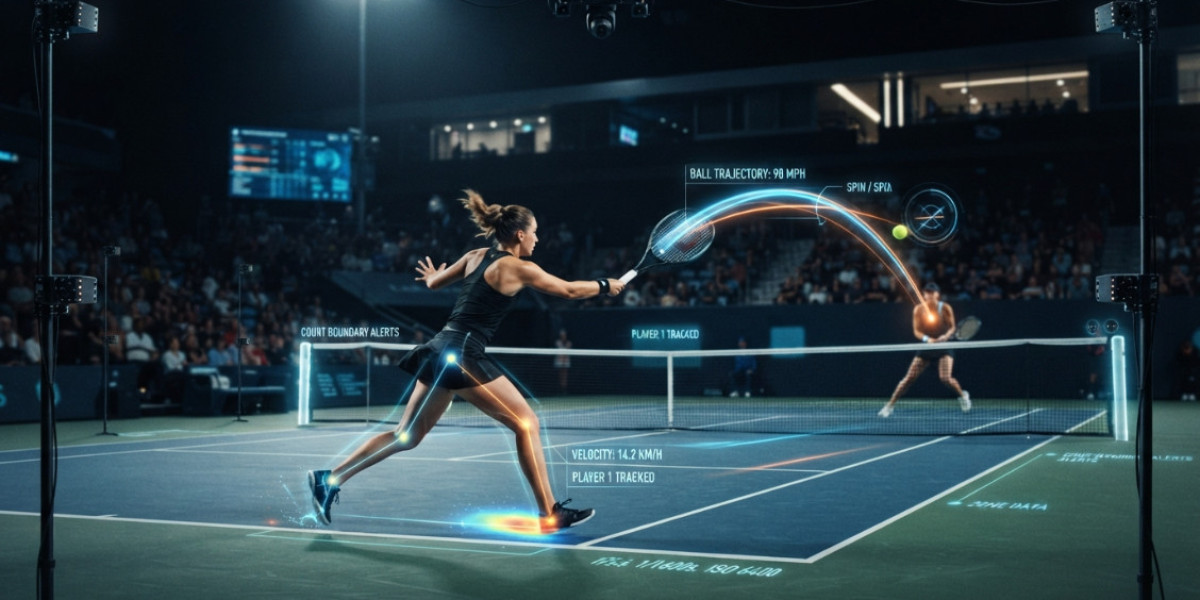

Ball machines have existed for decades, but most of them share the same limitation: they can't see the player. They fire on a timer or a fixed pattern, regardless of where someone is standing or how they just hit the previous shot. That's starting to change with cameras and machine learning built directly into training equipment. An AI pickleball machine that can track ball landing position and player location represents a meaningful shift from static repetition toward responsive, game-like practice.
The technical piece worth understanding is fairly simple: a camera captures where the ball lands relative to the court, and software uses that data to adjust the next feed, or to score a drill in real time. Instead of a player guessing whether their shot placement is improving, the system provides actual landing data. That kind of measurable feedback loop is something coaches have used with video analysis for years, but it's now available built into the practice equipment itself, without needing a second person to operate a camera or review footage afterward.
Voice control and LED feedback have also become common additions to vision-enabled machines. A player mid-drill can call out a command to switch feed patterns without breaking focus or walking to a control panel, and lights on the machine can indicate whether a shot met the target zone. Small design details like these matter more than they might seem on paper, since anything that interrupts flow during a drill session reduces how much useful repetition a player actually gets done in a limited practice window.
For players and coaches evaluating this category, it helps to compare how vision is implemented across a full product range. Checking Tenniix directly shows the difference between machines with fixed feeding patterns and those with full tracking and analysis capability, which matters when deciding whether a basic model or a vision-equipped one fits a given training goal.
Challenge modes are another area where this technology adds value. Rather than repeating the same drill indefinitely, a vision-enabled machine can vary feed patterns based on how a player is performing, effectively creating a dynamic difficulty curve similar to what's found in fitness apps. That kind of adaptive structure keeps sessions from becoming repetitive, which is often what causes players to lose interest in solo practice over time.
There's also a coaching application worth mentioning. Instructors working with multiple students can use landing-zone data to quickly identify a specific technical flaw — a shot that consistently drifts wide, for instance — without needing to review slow-motion video after the fact. That immediacy speeds up the feedback cycle considerably compared to traditional post-session film review, and it lets a coach spend more of a lesson correcting technique rather than diagnosing it.
As camera and processing costs continue to drop, it's likely that vision-based feedback becomes a standard feature across training equipment rather than a premium add-on, the same way it has in other sports technology categories over the past decade.
It's also worth noting that vision-based tracking tends to hold up well across different court surfaces and lighting conditions found at most public and club facilities, since the underlying camera and sensor technology has matured considerably compared to earlier consumer attempts at motion tracking. That reliability is part of why the feature has moved from a novelty in demo videos to something players actually depend on session after session.
FAQ
What does "AI vision" actually track during a session? Typically, it tracks ball landing location and player position, using that data to adjust feeding and provide performance feedback.
Does vision tracking require a separate camera setup? No. Vision-enabled machines usually integrate the camera directly into the unit, with no external setup required.
Is this technology only useful for competitive players? No. Recreational players benefit from landing-zone feedback just as much, since it helps identify specific technical habits that are hard to notice without data.
Can coaches use this data during lessons? Yes, many coaches use landing-zone and consistency data to identify technical issues more quickly than traditional visual observation alone allows.